AI marketing insights, minus the hype
Deep dives, frameworks, and playbooks on building marketing systems with AI. Browse the published articles below, or use the frameworks to start from a recurring problem.
Every playbook, newest first
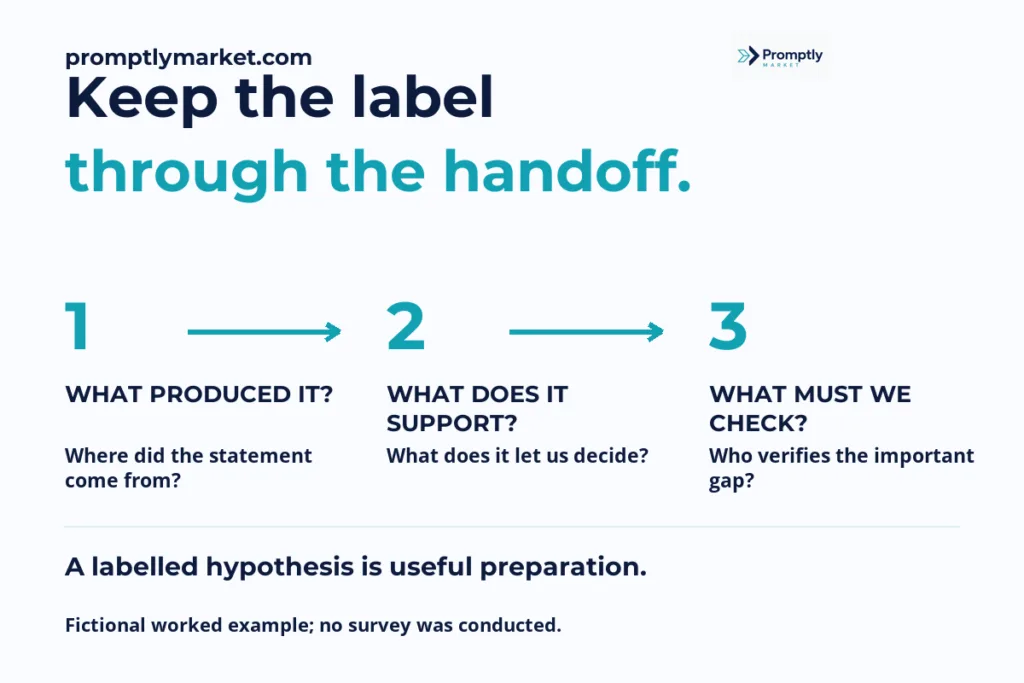
Synthetic Response Review Worksheet: From Generated Claim to Next Check
A copyable research review sheet that labels generated claims, identifies missing evidence and assigns the next validation step.
Read the article →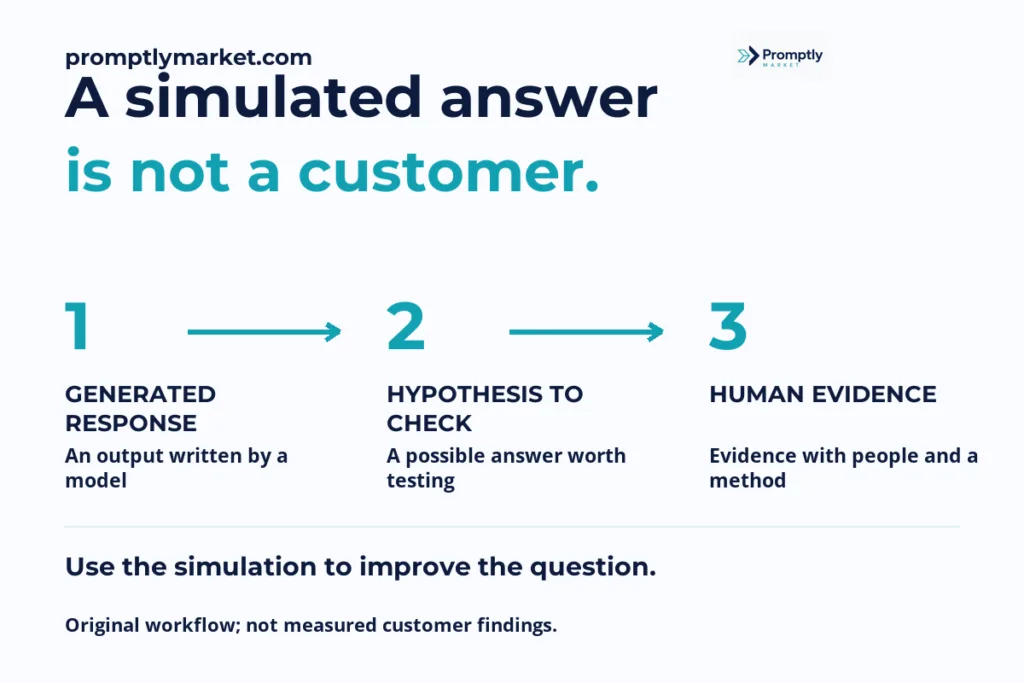
AI Survey Responses Are Not Customer Evidence: A Practical Review
Use synthetic responses to test a research workflow without treating generated opinions as measured customer demand.
Read the article →
AI Content Release Worksheet: Claims, Owners and Proof
A copyable worksheet for claim evidence, release ownership, destination checks and recovery in AI-assisted marketing.
Read the article →
How to Measure a Content Operating System: Cycle Time, Rework and Defects
A practical scorecard and clearly illustrative eight-piece example for measuring content cycle time, review returns and publication defects.
Read the article →
How Do You Know If You Actually Have an AI Marketing System? A 10-Point Checklist
You actually have an AI marketing system when a set of connected steps runs on a schedule without you starting each one by hand,…
Read the article →
What Is a RevOps Funnel, and Why Does It Fix the Handoff Marketing Keeps Losing?
A RevOps funnel is a single, shared pipeline that marketing and sales both work from, using the same lead definitions and the same record…
Read the article →
How Do You Price a Productised Service? Applying the Pricing Ladder
Pricing a productised service means replacing an hourly quote with three fixed packages built around outcomes, not hours worked, so a buyer picks a…
Read the article →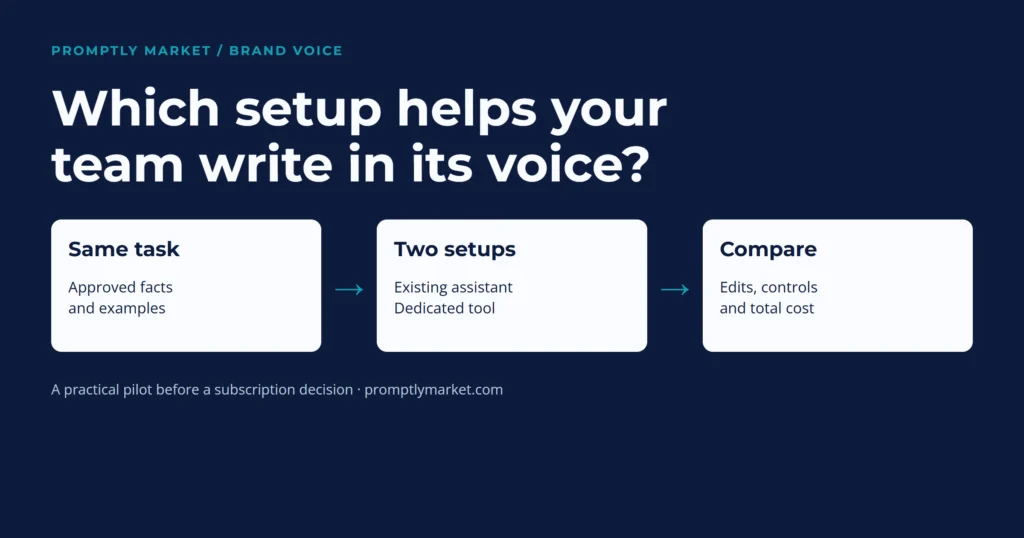
What Is a Brand Voice AI Tool, and Do You Actually Need One?
Style checkers, custom-trained assistants, and voice-analysis dashboards all still need a written voice definition to check against. Here is what these tools actually do and when paying for one is worth it.
Read the article →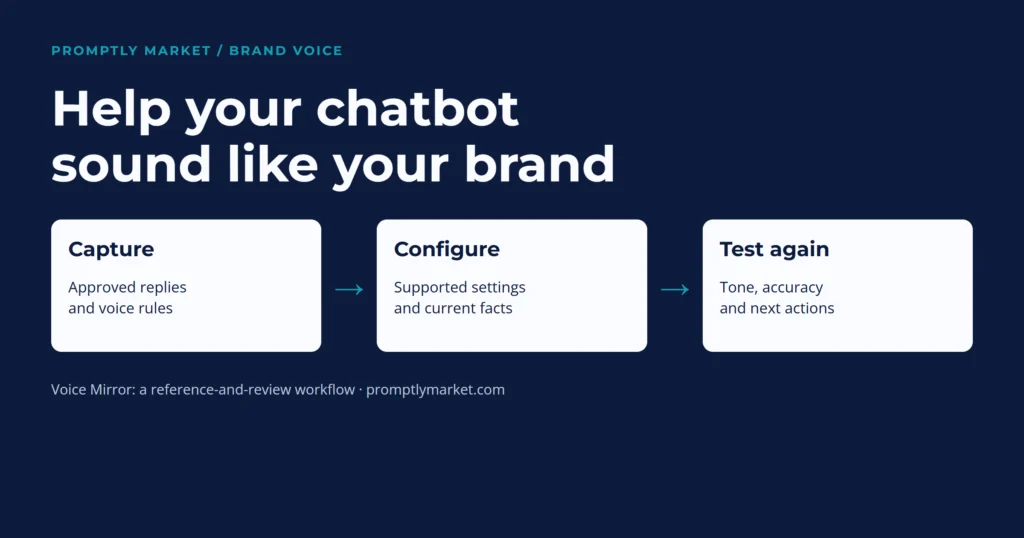
How Do You Keep AI Chatbots On-Brand? The Voice Mirror System
A four-step editorial framework for capturing voice examples, building a reference and testing chatbot drafts against it.
Read the article →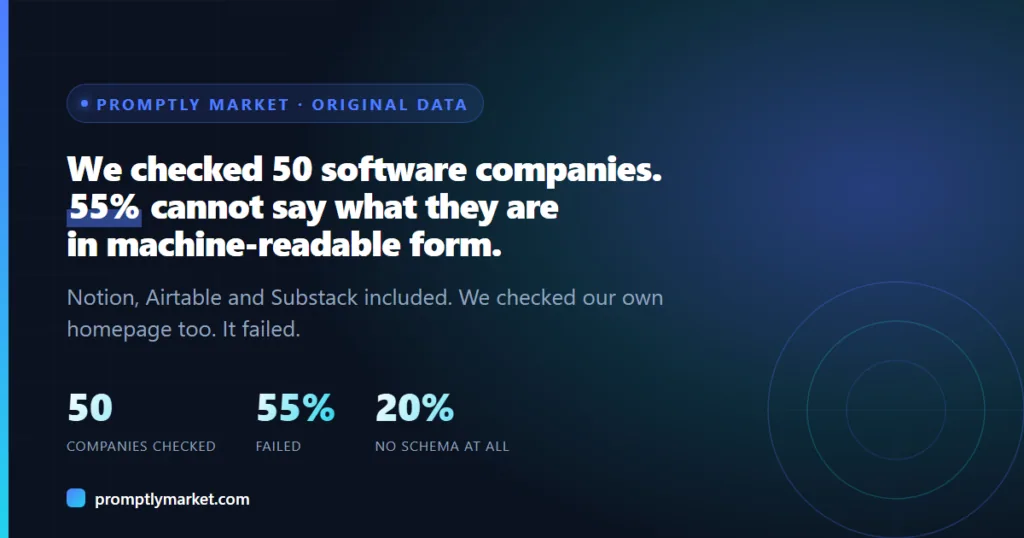
We Checked 50 Software Companies: 55% Cannot Say What They Are in Machine-Readable Form
Original data on 50 software homepages. 20% publish no Organization schema at all, 32% have no sameAs, and only 45% name their category.
Read the article →
Schema Markup for Brand Entities: What to Add and What Goes Wrong
Review Organization and Person markup, sameAs links and common implementation errors against the facts on the page.
Read the article →
What Is a Knowledge Panel, and How Does It Relate to How AI Describes You?
A knowledge panel cannot be created, bought or requested. What it actually is, where its data comes from, and what it tells you about AI descriptions.
Read the article →
The 12 Surfaces That Decide How AI Describes Your Brand
A review of twelve surfaces where brand descriptions can differ. Use the checklist to find inconsistencies, not as a proven ranking of AI influence.
Read the article →
What Is Entity Consistency in SEO, and Why Does It Matter More With AI Search?
Check whether the sources describing your brand agree on names, categories and core facts, then record and correct the differences you control.
Read the article →
Why Does ChatGPT Get My Company Wrong, and How Do I Fix It?
ChatGPT gets your company wrong for one of six reasons. How to diagnose which one applies to you, how to test it properly, and the fix for each.
Read the article →
Entity Consistency in Press Releases: What It Is and Why It Matters for PR
Review company names, category descriptions and factual claims in a press-release boilerplate against the brand reference.
Read the article →
The Demand Signal Radar: Finding What to Write Before You Guess
A workflow for recording buyer questions, source context and repeated observations to investigate content topics. Includes limits and a hypothetical example, not a conversion claim.
Read the article →
The Brand Memory Bank: A Dated Reference for Brand Facts
Build a dated brand reference for core facts, approved wording and claims to avoid. Check the source version and review AI output before using it.
Read the article →
The Automation Ladder: Which Marketing Tasks to Give AI First
The Automation Ladder is a running order for handing marketing work to AI: reshape, retrieve, draft, route. Most AI marketing fails on the order, not the tool.
Read the article →
The Objection Library: Record Buyer Questions and Approved Answers
A practical workflow for recording buyer questions, approved answers, supporting evidence and review dates. Includes a hypothetical example, not a reported client result.
Read the article →
The Feedback Loop System: How to Turn Every Customer Reply Into a Better Marketing System
A four-stage editorial method for recording customer feedback, reviewing themes and deciding which prompts or copy need a change.
Read the article →
The Entity Consistency System: How to Build a Brand AI Actually Recognizes
A five-step editorial workflow for aligning brand facts across owned surfaces and recording how AI tools describe them. Correct descriptions are not guaranteed.
Read the article →
The Competitor Signal Loop: How to Turn Competitor Noise Into Your Next Marketing Move
A weekly three-step system, Scan, Filter, Move, for turning competitor noise into one specific marketing decision instead of a folder of screenshots nobody reopens.
Read the article →The Onboarding Sequence: Audit, Build and Handoff for a New Client
A proposed Audit, Build and Handoff framework for client marketing onboarding. Adapt the timeline to scope, access, approvals and team capacity.
Read the article →AEO vs SEO in 2026: What to Check and Measure
Compare SEO and answer-engine visibility, review clear answers and source evidence, and test observed results without assuming AI citations.
Read the article →
The Pricing Ladder: How to Price a Marketing System, Not Just a Tool
Most marketing teams price the way they were taught to budget: add up the hours, add a margin, call it done. That works for…
Read the article →
The Content Gate: How to Quality-Check AI Marketing Output Before It Ships
Every marketing team using AI right now has the same hidden problem. Content production got 10x faster, but nothing got 10x better at catching…
Read the article →
How to Build an AI Content Calendar (Without Losing Strategic Control)
A 5-step system for building an AI content calendar that scales output without losing brand voice or strategy: pick core ideas, map the repurpose, let AI draft inside it, one human checkpoint.
Read the article →AI Search Citations: A Practical Content and Access Review
A four-part review of content clarity, evidence, service-specific access and sampled AI-answer observations. No guaranteed citation formula or timing promises.
Read the article →The Metrics That Survive AI: Which Marketing KPIs Still Mean Something
A practical test for choosing marketing KPIs that connect activity to qualified traffic, pipeline, revenue and retention, with measurement limits.
Read the article →
The AI Marketing Maturity Curve: 5 Stages From Ad-Hoc to AI Systems
Five proposed stages for discussing AI marketing workflows and choosing what to review next. This is an editorial model, not a validated maturity assessment.
Read the article →
The Consumer Insight Loop: Turn Customer Feedback Into Positioning With AI
A 4-step AI system for mining customer reviews, support tickets, and sales calls for the exact language that should be in your marketing copy.
Read the article →
The Repurposing Engine: Turn One Blog Post Into a Week of Content With AI
A 4-stage system for turning one pillar article into a week of platform-native content with AI, without writing five separate originals.
Read the article →
What Is AI Content Operations? The Complete System for Scaling Without Losing Quality
A practical workflow for planning, drafting, reviewing and distributing AI-assisted content, with clear ownership and quality checks.
Read the article →
How to Audit Your AI Marketing Stack in 2026 (Stop Paying for Tools You Don’t Use)
Audit tool use, overlapping functions and workflow gaps before deciding which subscriptions to keep. Any savings depend on your actual costs and needs.
Read the article →
How to Use AI for Marketing Reporting (Without Drowning in Dashboards)
A four-step workflow for collecting, structuring, interpreting and delivering a marketing report. Review definitions and causal explanations before sharing.
Read the article →
The Growth System Canvas: See Your Whole Funnel
Map funnel stages, acquisition and retention assumptions on one page, then identify the evidence needed for the next decision.
Read the article →
The RevOps Loop: Connecting Marketing to Revenue
A framework for connecting marketing, sales and customer success through shared source tags, handoffs and retention feedback.
Read the article →
The Differentiation Map: A Framework for Real Positioning
The Differentiation Map helps brands identify and own their unique positioning in crowded markets using AI-powered competitive analysis and messaging strategy.
Read the article →
The AI Stack Blueprint: Map Your Marketing AI Tools
The AI Stack Blueprint is a framework for selecting, integrating, and auditing AI tools across your marketing operations. Stop tool sprawl and build a cohesive AI infrastructure.
Read the article →Find insights by topic
Every article maps to one of the three pillars of an AI marketing system.
Never miss a framework
Join the email list for future updates, or open the free starter kit directly. The articles and resources are available without subscribing.