25 AI marketing frameworks, free to read
A framework is a repeatable way to make a decision you face more than once, written so someone else can run it too. No signup, no gate.
Start from the problem you have
Browse all 25 frameworks
The AI Content Engine: Stop Buying AI Tools, Start Building a System
Adding AI to a broken workflow just makes mediocre content faster. Here is the 5-stage AI Content Engine a repeatable system that turns AI into an operating rhythm.
Read the framework →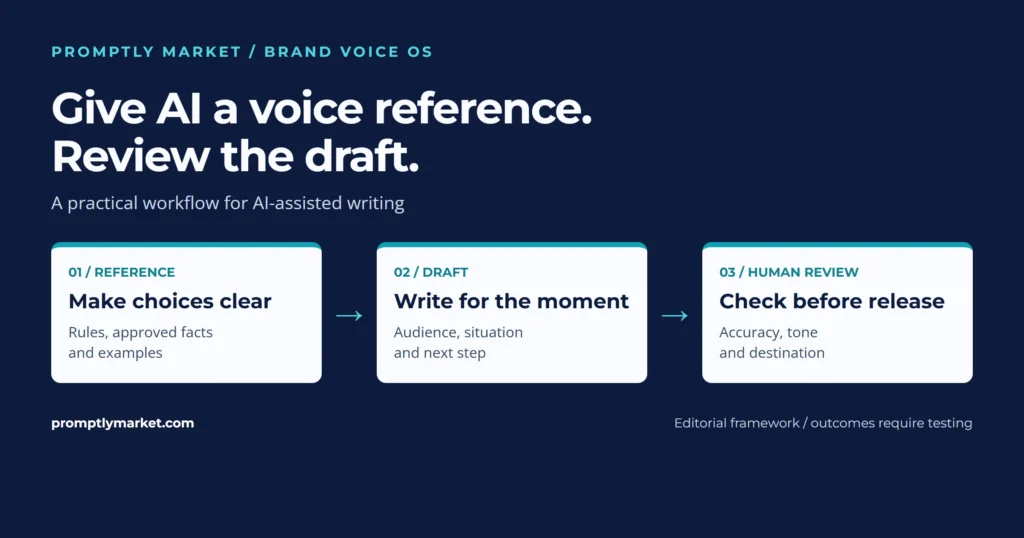
The Brand Voice OS: A Reference and Review Workflow for AI Drafts
A five-part editorial framework for documenting brand voice, approved examples and review rules for AI-assisted drafts.
Read the framework →
The Prompt Library System: Stop Rewriting the Same AI Prompt Every Day
Your best AI prompts vanish into chat history. Turn them into a shared, reusable asset with the Prompt Library System.
Read the framework →
The AEO Scorecard: Log Brand Mentions and Citations in AI Answers
A six-part checklist for recording brand mentions and linked sources in AI answers. Results are observations, not a validated visibility score or citation forecast.
Read the framework →
The AI Stack Blueprint: Map Your Marketing AI Tools
The AI Stack Blueprint is a framework for selecting, integrating, and auditing AI tools across your marketing operations. Stop tool sprawl and build a cohesive AI infrastructure.
Read the framework →
The Differentiation Map: A Framework for Real Positioning
The Differentiation Map helps brands identify and own their unique positioning in crowded markets using AI-powered competitive analysis and messaging strategy.
Read the framework →
The RevOps Loop: Connecting Marketing to Revenue
A framework for connecting marketing, sales and customer success through shared source tags, handoffs and retention feedback.
Read the framework →
The Growth System Canvas: See Your Whole Funnel
Map funnel stages, acquisition and retention assumptions on one page, then identify the evidence needed for the next decision.
Read the framework →
The Repurposing Engine: Turn One Blog Post Into a Week of Content With AI
A 4-stage system for turning one pillar article into a week of platform-native content with AI, without writing five separate originals.
Read the framework →
The Consumer Insight Loop: Turn Customer Feedback Into Positioning With AI
A 4-step AI system for mining customer reviews, support tickets, and sales calls for the exact language that should be in your marketing copy.
Read the framework →
The AI Marketing Maturity Curve: 5 Stages From Ad-Hoc to AI Systems
Five proposed stages for discussing AI marketing workflows and choosing what to review next. This is an editorial model, not a validated maturity assessment.
Read the framework →The Metrics That Survive AI: Which Marketing KPIs Still Mean Something
A practical test for choosing marketing KPIs that connect activity to qualified traffic, pipeline, revenue and retention, with measurement limits.
Read the framework →AI Search Citations: A Practical Content and Access Review
A four-part review of content clarity, evidence, service-specific access and sampled AI-answer observations. No guaranteed citation formula or timing promises.
Read the framework →
How to Build an AI Content Calendar (Without Losing Strategic Control)
A 5-step system for building an AI content calendar that scales output without losing brand voice or strategy: pick core ideas, map the repurpose, let AI draft inside it, one human checkpoint.
Read the framework →
The Content Gate: How to Quality-Check AI Marketing Output Before It Ships
Every marketing team using AI right now has the same hidden problem. Content production got 10x faster, but nothing got 10x better at catching…
Read the framework →
The Pricing Ladder: How to Price a Marketing System, Not Just a Tool
Most marketing teams price the way they were taught to budget: add up the hours, add a margin, call it done. That works for…
Read the framework →The Onboarding Sequence: Audit, Build and Handoff for a New Client
A proposed Audit, Build and Handoff framework for client marketing onboarding. Adapt the timeline to scope, access, approvals and team capacity.
Read the framework →
The Competitor Signal Loop: How to Turn Competitor Noise Into Your Next Marketing Move
A weekly three-step system, Scan, Filter, Move, for turning competitor noise into one specific marketing decision instead of a folder of screenshots nobody reopens.
Read the framework →
The Entity Consistency System: How to Build a Brand AI Actually Recognizes
A five-step editorial workflow for aligning brand facts across owned surfaces and recording how AI tools describe them. Correct descriptions are not guaranteed.
Read the framework →
The Feedback Loop System: How to Turn Every Customer Reply Into a Better Marketing System
A four-stage editorial method for recording customer feedback, reviewing themes and deciding which prompts or copy need a change.
Read the framework →
The Objection Library: Record Buyer Questions and Approved Answers
A practical workflow for recording buyer questions, approved answers, supporting evidence and review dates. Includes a hypothetical example, not a reported client result.
Read the framework →
The Automation Ladder: Which Marketing Tasks to Give AI First
The Automation Ladder is a running order for handing marketing work to AI: reshape, retrieve, draft, route. Most AI marketing fails on the order, not the tool.
Read the framework →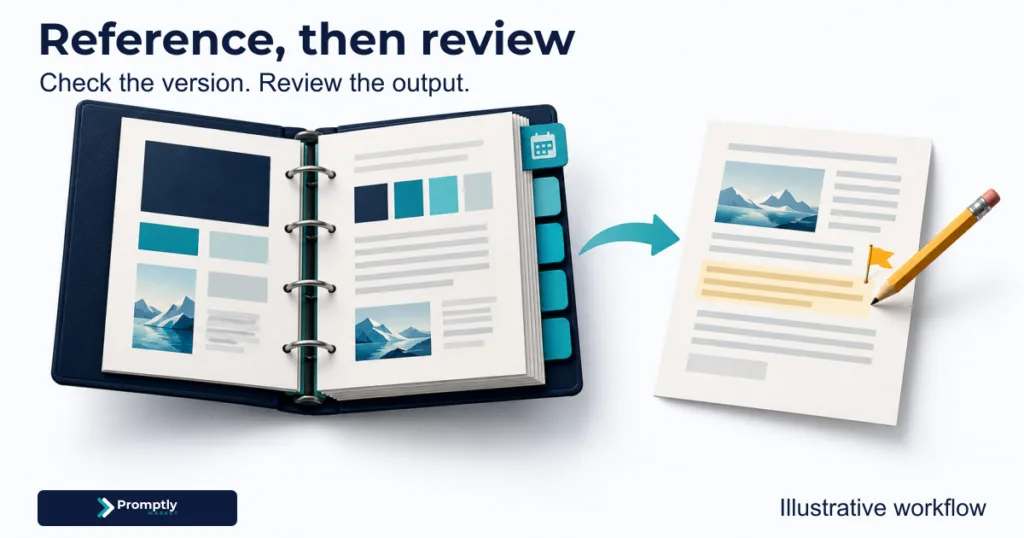
The Brand Memory Bank: A Dated Reference for Brand Facts
Build a dated brand reference for core facts, approved wording and claims to avoid. Check the source version and review AI output before using it.
Read the framework →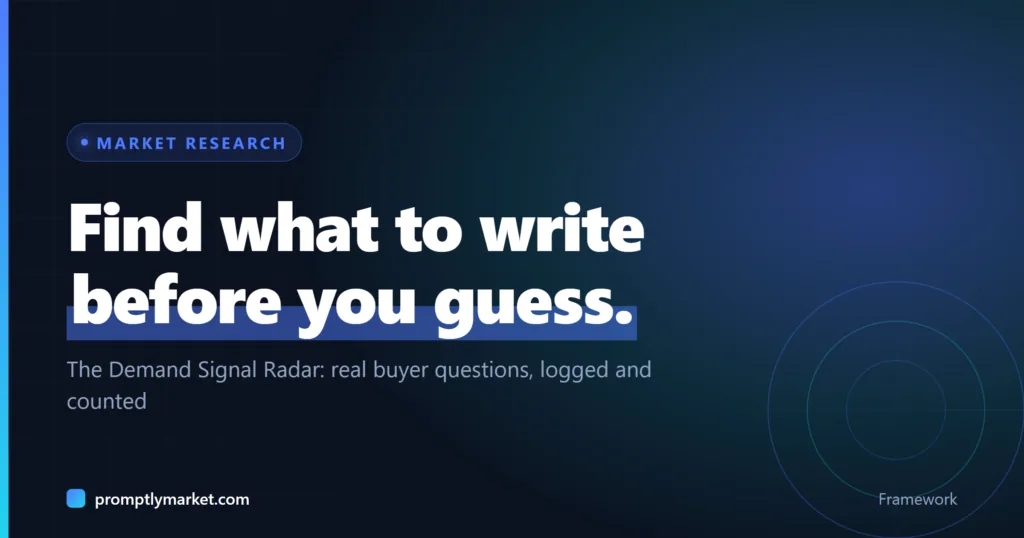
The Demand Signal Radar: Finding What to Write Before You Guess
A workflow for recording buyer questions, source context and repeated observations to investigate content topics. Includes limits and a hypothetical example, not a conversion claim.
Read the framework →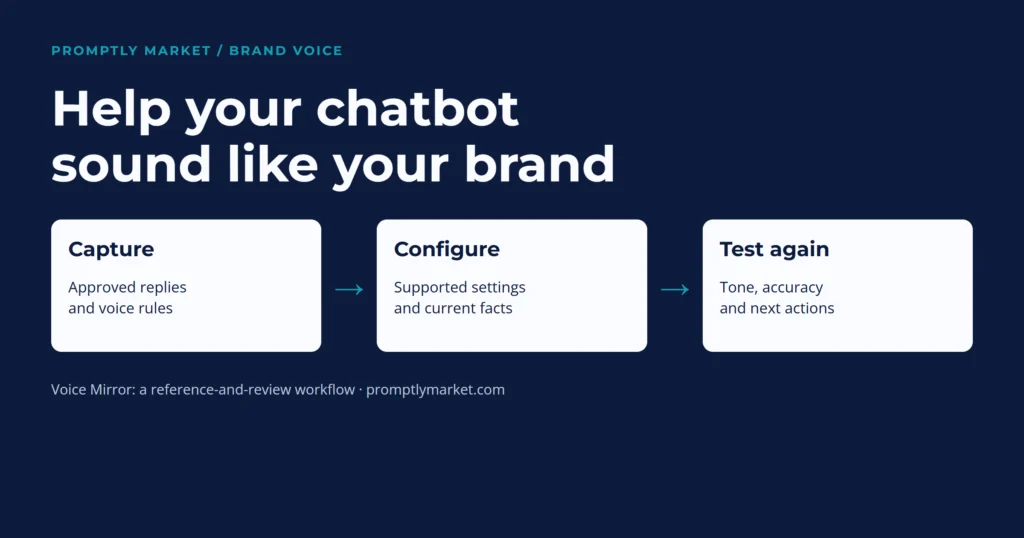
How Do You Keep AI Chatbots On-Brand? The Voice Mirror System
A four-step editorial framework for capturing voice examples, building a reference and testing chatbot drafts against it.
Read the framework →How to use these
Use one when
- You make the same decision more than once
- Someone else will have to run it too
- You need a consistent review standard for recurring work
These are not
- Prompts. A prompt is an instruction; its output still needs review
- Tool recommendations. Nothing here needs a purchase
- Rules. Each shows its reasoning, so keep the half that fits
A framework you cannot argue with is usually just an opinion in a diagram.
Want the whole picture first?
These frameworks are the individual pieces. The structure they slot into is covered in what a marketing operating system is and how to build one.
Common questions
What is an AI marketing framework?
A named, repeatable sequence for a marketing decision you make more than once, written so it can be handed to someone else and checked afterwards. It defines what gets made, how, and what standard it has to clear before it ships.
Are these free?
Yes, all 25 of them, in full, with no signup and no gate. There is an email list if you want new ones as they are published, but nothing on this page is behind it.
Which framework should I start with?
Start from your symptom rather than the top of the list. If AI output feels generic, start with brand voice. If you are producing a lot with no results, start with demand and measurement. If everything depends on one person, start with workflow.
Do I need AI tools to use these?
No. Most of them are documents and decisions. Tools become useful once the process is stable enough that you know what you are automating.