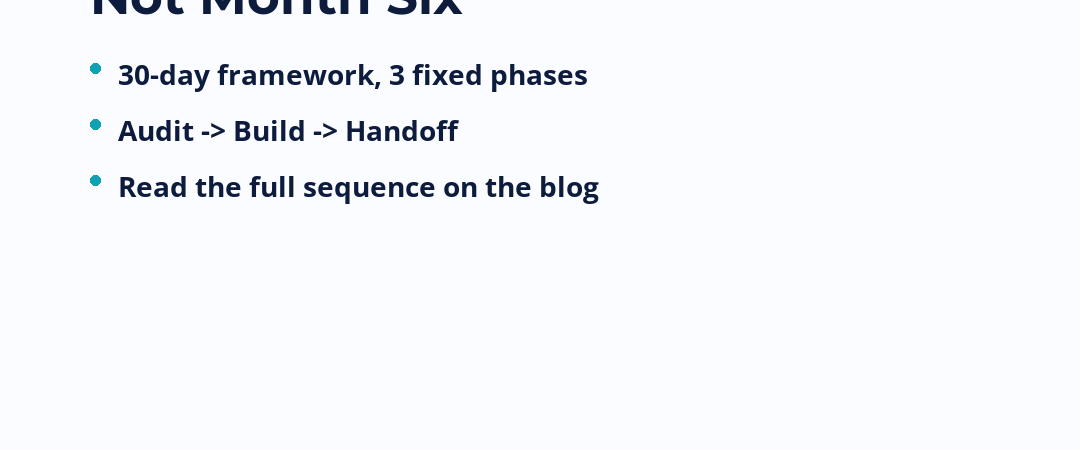
Answer: The Onboarding Sequence is a 30-day framework for standing up a new client’s or business’s marketing system in three fixed phases (Audit, Build, Handoff) instead of improvising each new engagement from scratch. It exists because most “onboarding” is really just the first month of chaos happening in front of a paying client instead of before them.
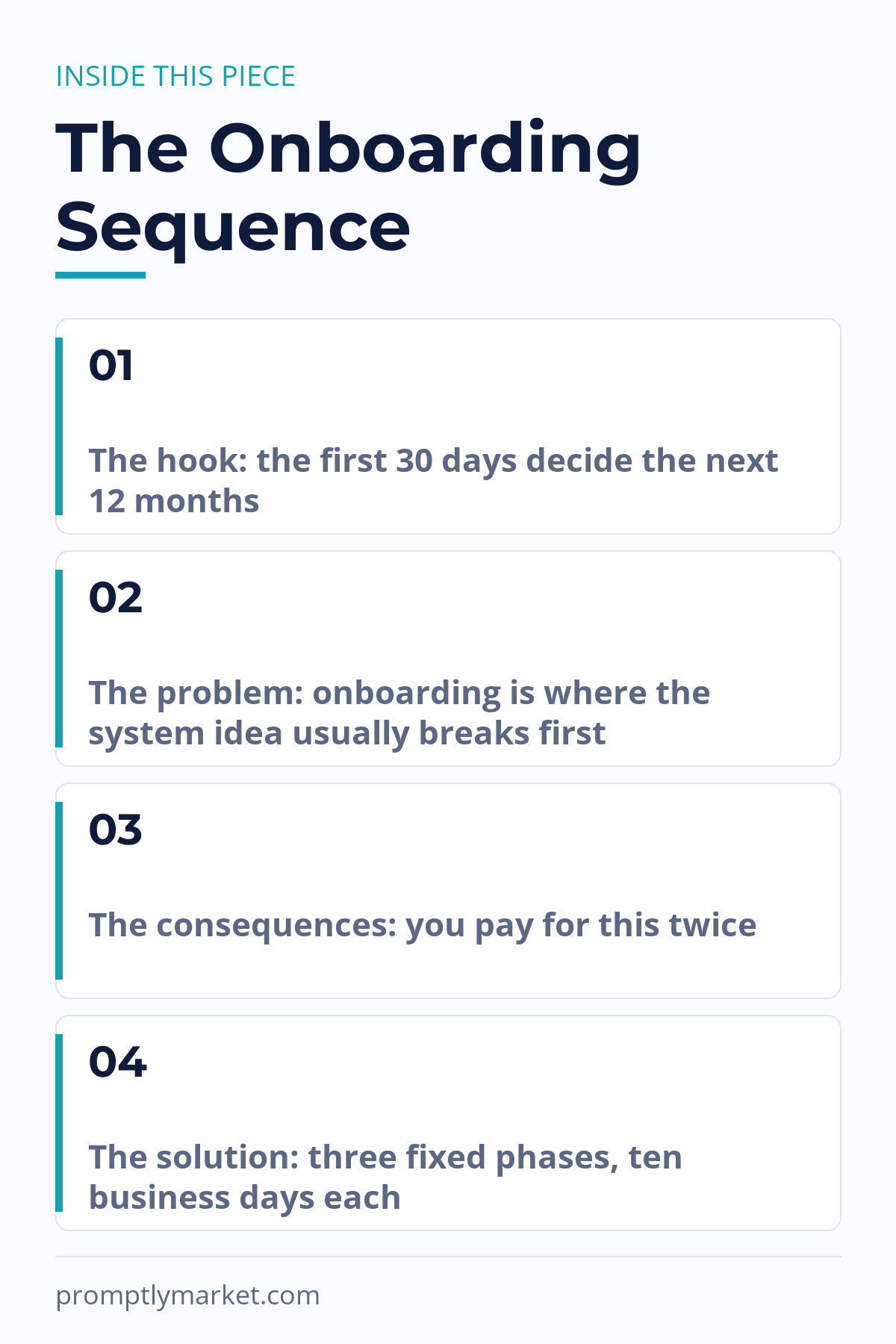
The hook: the first 30 days decide the next 12 months
Marketers rarely lose a client over a bad campaign in month six. They lose them in month one, when nobody could explain what was actually happening yet, and the client quietly decided this was going to be another vendor they’d have to manage instead of trust.
The problem: onboarding is where the “operating system” idea usually breaks first
Every marketer running AI-assisted campaigns has some version of a system: a stack of tools, a content process, a reporting rhythm. The gap shows up the moment a new client or a new internal stakeholder needs to be brought into that system. Without a fixed sequence, onboarding becomes an improvised scramble: access requests sent out of order, brand guidelines requested twice, the client asked the same discovery questions three different ways by three different people. None of it is fatal individually. Together, it reads as disorganized, at exactly the moment you most need to look like the opposite.
The consequences: you pay for this twice
A messy onboarding costs you in two currencies. First, literal time: work that should take a fixed, plannable block instead drags out for weeks because nobody defined what “done with onboarding” looks like. Second, and more expensive, trust: a client who doesn’t understand what’s happening in month one starts asking for more check-ins, more explanations, more proof, permanently. You end up managing their anxiety instead of their marketing, for the life of the relationship. If you’re building toward productized or done-with-you offers (packaging your expertise as a repeatable service rather than open-ended hours), an inconsistent onboarding also makes it impossible to price consistently or promise a timeline, because every engagement genuinely does start from zero.
The solution: three fixed phases, ten business days each
The Onboarding Sequence is not a longer process, it’s a scoped one. Three phases, roughly ten business days apiece, each with one clear exit condition before you move to the next.
Phase 1: Audit (Days 1-10)
Before touching a single campaign, map what already exists. Every tool currently in use, every account with access issues, every piece of brand guidance (even the version that only lives in someone’s head), and the last 90 days of real performance data, not the highlight reel. The exit condition: a single one-page audit document the client has seen and confirmed is accurate. This step alone prevents the most common failure mode: building a new system on top of assumptions nobody checked.
Phase 2: Build (Days 11-20)
Now design the actual operating procedure: which channels, which cadence, which reporting format, and critically, which of the client’s existing tools you’re keeping versus replacing (never rip out a working tool just because it’s not your default). This phase produces the artifacts a real Marketing Operating System needs: a content calendar template, a reporting dashboard, a documented approval flow. The exit condition: the client has seen and approved the system on paper, before a single piece of content goes live under it.
Phase 3: Handoff (Days 21-30)
This is the phase most onboarding sequences skip entirely, and it’s the one that actually builds long-term trust. Document how the system runs well enough that a new team member (yours or the client’s) could pick it up cold. Set the recurring reporting rhythm live. Hold one structured “here’s how this runs going forward” session, not a status update, an actual walkthrough of the machine. The exit condition: the client can describe, in their own words, how their marketing system now works.
Why the fixed timeline matters more than the content of each phase
The specific tasks inside each phase will vary by client. What should not vary is the shape: three phases, roughly ten days each, each with a document the client has actually seen. A client who knows exactly what week three looks like on day one trusts you more than a client getting brilliant work delivered in an order they can’t predict. Predictability is a deliverable in its own right, and it’s the cheapest one to give.
How this compounds
Run this the same way twice and you have something more valuable than a good onboarding experience: a repeatable, scoped, priceable service. That’s the difference between selling hours (open-ended, hard to predict, hard to scale) and selling a system (fixed scope, fixed timeline, sellable at a fixed price). The teams charging a premium for “we’ll get your marketing running properly” are, almost without exception, running some version of this sequence, not reinventing onboarding every time.
FAQ
Does the Onboarding Sequence work for internal hires, not just clients?
Yes. Swap “client” for “new marketing hire” and the same three phases apply: audit what exists, design the system on paper, then hand off with documentation. New hires who get a real onboarding sequence ramp faster and ask fewer repeat questions.
What if the engagement is too small for a 30-day process?
Compress the timeline, not the phases. A smaller engagement can run all three phases in a week, but skipping a phase (especially the Audit) is what causes rework later, regardless of engagement size.
What’s the single most-skipped step?
Phase 3’s structured walkthrough. Most onboarding stops at “the work is live” and never explicitly hands over how the system runs, which is exactly the step that turns a client into someone who trusts the process instead of someone who has to keep checking on it.
This is one piece of the Marketing Operating System: the connected procedures that run a marketing function end to end. See the rest at the Frameworks library.
One marketing system a week, in plain language.
No fluff, no tool reviews, no hype. Just the frameworks and checklists behind the posts, sent as they are published. Free, and you can leave any time.